A better memory for what, Your Peptide Pal?
A pal might help me remember. The experiment I landed in involved a rat, an injured brain and a learned response worth retaining.
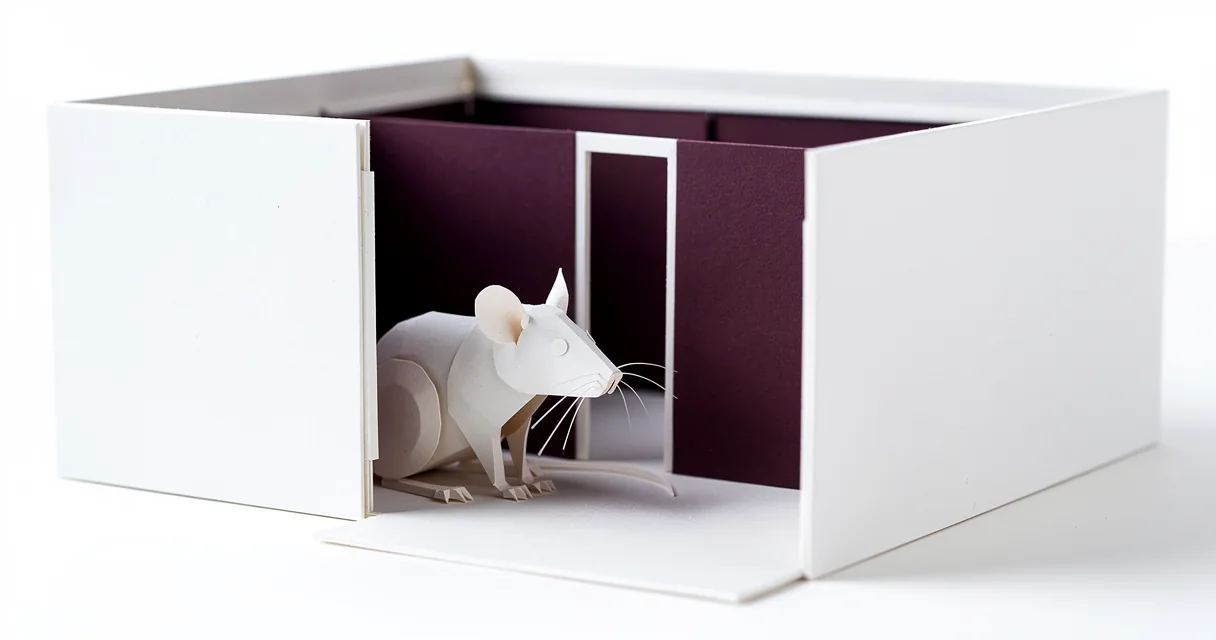
A learned avoidance response
Memory helper sounded cosy to me. Instead, a Semax experiment took me to rats with experimentally induced ischemic injury in the prefrontal cortex. The paper reported a smaller cortical infarction and better retention of a conditioned passive-avoidance response. Ischemia means an interruption of the tissue’s blood supply; the injury in this experiment was photoinduced.
That is a rather particular kind of help. The animal was retaining a learned avoidance response after an induced injury, and the investigators measured brain damage alongside that retention. Tissue preservation and remembered behaviour give the question some substance.
There is also an uncomfortable gap between the friendly word “pal” and the laboratory task. I think that discomfort is useful. It makes “better memory” sound unfinished until the thing being remembered comes into view.
Objects, places and a different model
Another paper tested Semax and a derivative in transgenic Alzheimer’s-model mice. Its reported improvements covered cognitive tests, including novel-object recognition and the Barnes maze, alongside fewer amyloid inclusions in cortex and hippocampus. Those are mouse findings in a disease model.
Both reports are encouraging. Remembering a learned avoidance response after a cortical injury asks a different question from performance in those transgenic mice. On the memory experiments page, the tasks sit beside each other, with room to consider a more convincing follow-up.
Tissue protection and memory
I’d put tissue protection at the centre of a follow-up. Could the retained response be explained by the smaller injury, or would a memory effect remain after that possibility had been addressed? Either answer would be useful; a claim about a general memory helper would have to wait.
The brain-signal notes follow the molecular measurements underneath the behavioural hopes, including a change in the number of genes responding over time. The human findings move to Selank and anxiety, where an encouraging clinical account raises its own questions about alertness, immune changes and safety. These are separate lines of investigation; I have no experiment here that turns them into a combination to take.
For the original articles, there is a reading list. For personal treatment decisions, this site offers no medical advice.