Molecular measurements
I’d like to connect a remembered response to a measured molecular change.
Basal-forebrain BDNF protein
BDNF stands for brain-derived neurotrophic factor. In a rat study, intranasal Semax increased basal-forebrain BDNF protein at 3 h, with no corresponding increase in the cerebellum. The same work described specific, reversible binding in rat basal-forebrain preparations.
This concrete molecular event deserves to sit beside the memory tasks. I’m wary of promoting BDNF into a score for mental performance. A protein measurement in a specified piece of rat brain is an interesting event in its own right; the connection to a particular act of remembering still has to be demonstrated.
Gene messages in other experiments
A separate Semax study in male Wistar rats reported region-specific changes in neurotrophin gene expression: NGF and BDNF mRNA rose in the hippocampus, BDNF rose in the brainstem and cerebellum, and NGF mRNA fell in the frontal cortex. Here mRNA refers to the gene messages being measured, rather than the protein measured in the earlier experiment.
Selank also increased BDNF expression in the hippocampus of Wistar rats. I’d pursue the shared interest in that signal. I would also insist on separate behavioural tests for each compound: sharing a molecular measurement gives the investigation a lead, while memory remains the original question.

Changed gene counts after Selank
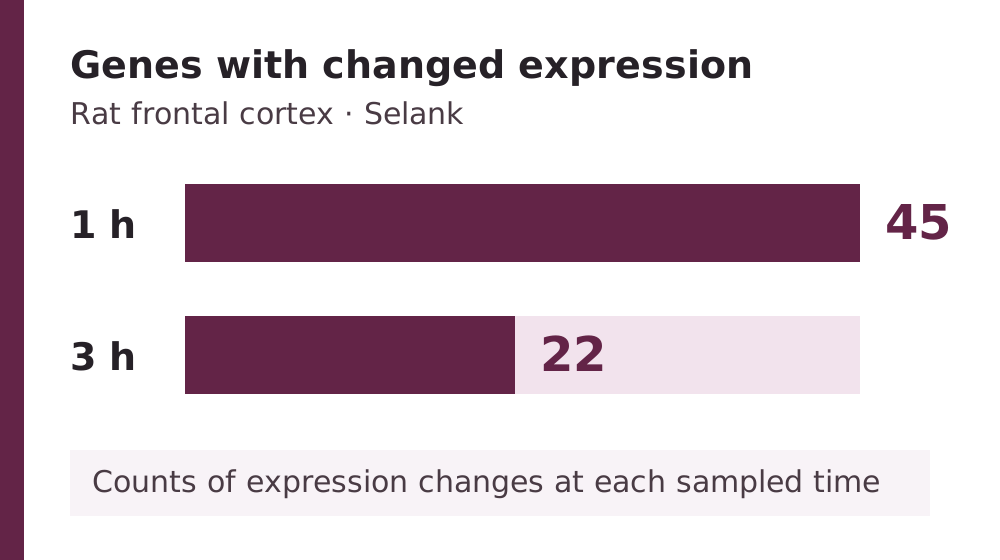
In rat frontal cortex, Selank administration produced significant expression changes in 45 genes at 1 h and 22 genes at 3 h. The shifts correlated positively with changes produced by GABA in that experiment.
The counts make a compact picture, but I wouldn’t read a falling bar as a fading memory benefit. These are counts of genes with expression changes at the sampled times. They do not measure how well an animal remembered something, and from those totals I cannot identify whether the same genes responded at both times.
A missing connection worth pursuing
Pairing a defined molecular change with a defined memory task would strengthen the case, especially if disrupting that change also altered the behavioural result. That is the causal question I want answered.
Until then, the gene and protein findings make the animal memory results more intriguing. My confidence stays attached to each measured outcome. It does not grow simply because the list of molecular names gets longer.